
Waveless Technology Explained
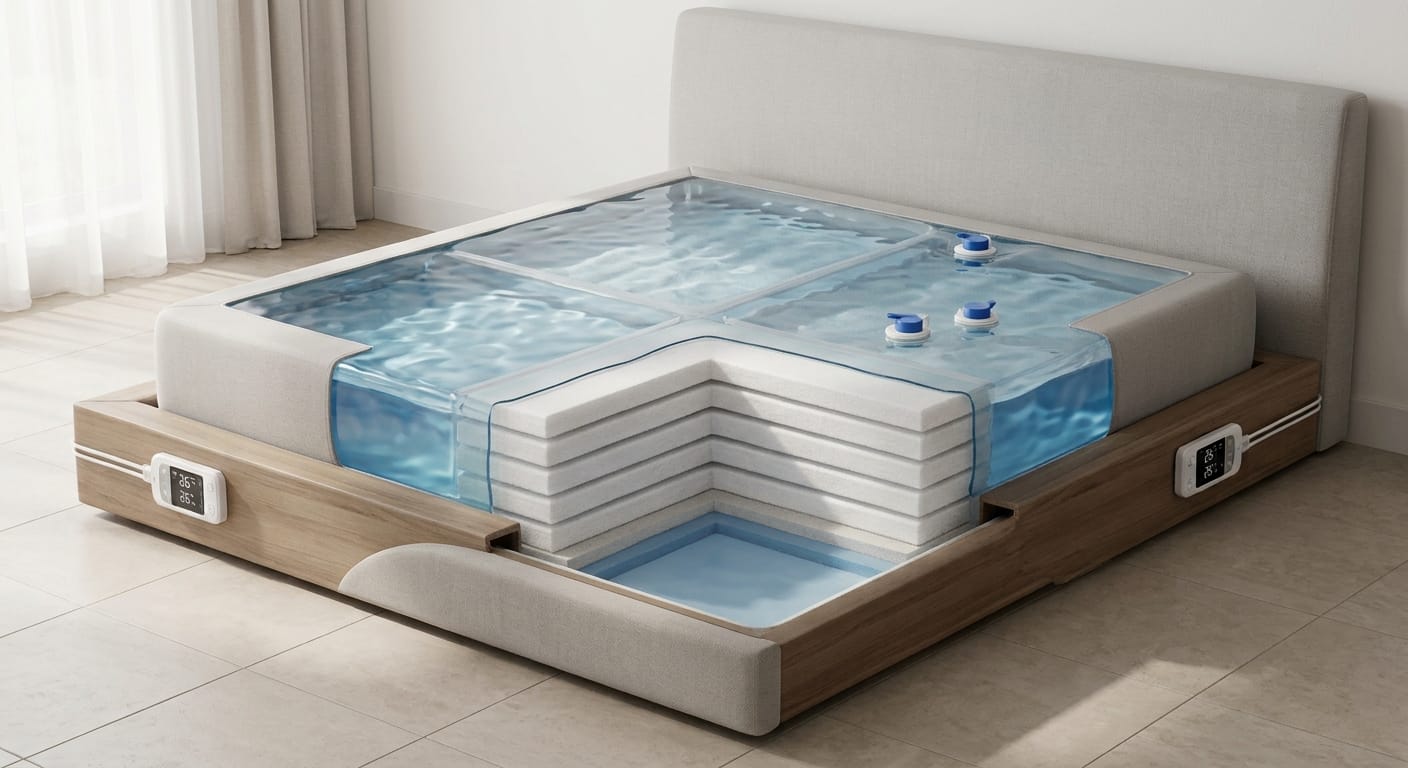
How Waterbeds are made waveless!
For millions of loyal fans, nothing compares to the classic waterbed experience. But as design innovation has evolved, the industry expanded to create wave-less technology, offering customized levels of movement for every preference.
The Appeal of the Classic Free-Flow Experience
To understand wave-less technology, it helps to start with the original benchmark: free-flow systems.
Free-flow mattresses celebrate pure fluid displacement. When you move, gentle, rhythmic micro-waves ripple across the surface before settling. This uninterrupted movement offers a unique dynamic feel, allowing the mattress to immediately shape itself around your body’s unique contours without any internal resistance.
For sleepers who love a soft, floating feel and rhythmic motion, the classic free-flow mattress remains an unrivalled favourite.
How Wave-less Technology Expands Your Choices
While many sleepers cherish the full movement of traditional beds, others prefer the targeted pressure relief of a waterbed with a stiller, more stationary feel. Wave-less technology was developed to give sleepers precise control over how much motion their bed produces.
Modern waterbeds achieve this stability using clever internal designs that manage how water moves inside the mattress:
Fibre Matrix Layers: Stacks of soft, non-woven fibre mats rest inside the water bladder. These layers gently absorb the energy of moving water, helping the surface stabilize quickly after you adjust your position. The more fibre layers, the more stable your mattress is.
Internal Baffles & Columns: Flexible vinyl walls or foam columns divide the internal space into smaller interconnected zones. These structures redirect water currents locally rather than allowing them to travel across the entire mattress. Though relatively effective at slowing water movement this never helped with supporting the body, and these days id no longer used as a method of movement reduction.
Finding Your Ideal Motion Level
Today’s waterbed market caters to a spectrum of preferences, categorized by how much motion the mattress retains:
| Mattress Style | Motion Level | The Sleep Experience |
| Free-Flow | Full Motion/ 20s of movement | Classic, continuous fluid contouring with gentle, rhythmic movement. |
| Semi-Waveless | Moderate Motion /10s of movement | Balanced feel; soft fluid contouring that settles in just half the time. |
| Waveless | Minimal Motion /5-6s of movement | Substantial stability; gentle water responsiveness with minimal movement. |
| Super Waveless | Micro Motion /2-3s of movement | Near-total stability; extremely brief movement that calms almost instantly. |
| Ultra Waveless | Stationary /1s of movement | Maximum stability; stable, plush support with very low motion transfer. |
Dual-Chamber Design: Customized Comfort for Couples
Wave-less engineering also paved the way for dual-bladder systems, making waterbeds ideal for partners with completely different preferences.
In a dual system, two independent bladders rest inside a single outer cover. This setup allows one partner to choose a traditional free-flow side with a higher temperature setting, while the other sleeps on a fully wave-less, cooler side. Both partners get their dream sleep surface, complete motion isolation, and personalized temperature control under the same covers.
A Spectrum of Comfort for Every Sleeper
Whether you love the nostalgic, full-body float of a classic free-flow mattress or prefer the steady, cushioned embrace of an ultra-wave-less model, water-based sleep offers unbeatable benefits. With adjustable warmth, pressure-point relief, and tailored motion levels, there is a perfect waterbed experience for everyone.
Waveless Technology Explained
Posted:
Last updated:
